How to Manage Burnout Before It Manages You
Feeling tired after a busy week is normal. Feeling exhausted, unmotivated, and emotionally drained for weeks or months at a time is something different. That’s where burnout often begins.
By Elyse Russo on June 18, 2026
Getty Images
Feeling tired after a busy week is normal. Feeling exhausted, unmotivated, and emotionally drained for weeks or months at a time is something different. That’s where burnout often begins.
Burnout doesn’t usually happen overnight. It builds gradually through chronic stress, overwhelming workloads, lack of recovery time, and the feeling that no matter how much you do, it’s never enough. Left unchecked, it can affect your productivity, relationships, physical health, and overall quality of life.
The good news is that burnout often gives warning signs before it becomes severe. Learning to recognize those signs and respond early can make a significant difference.
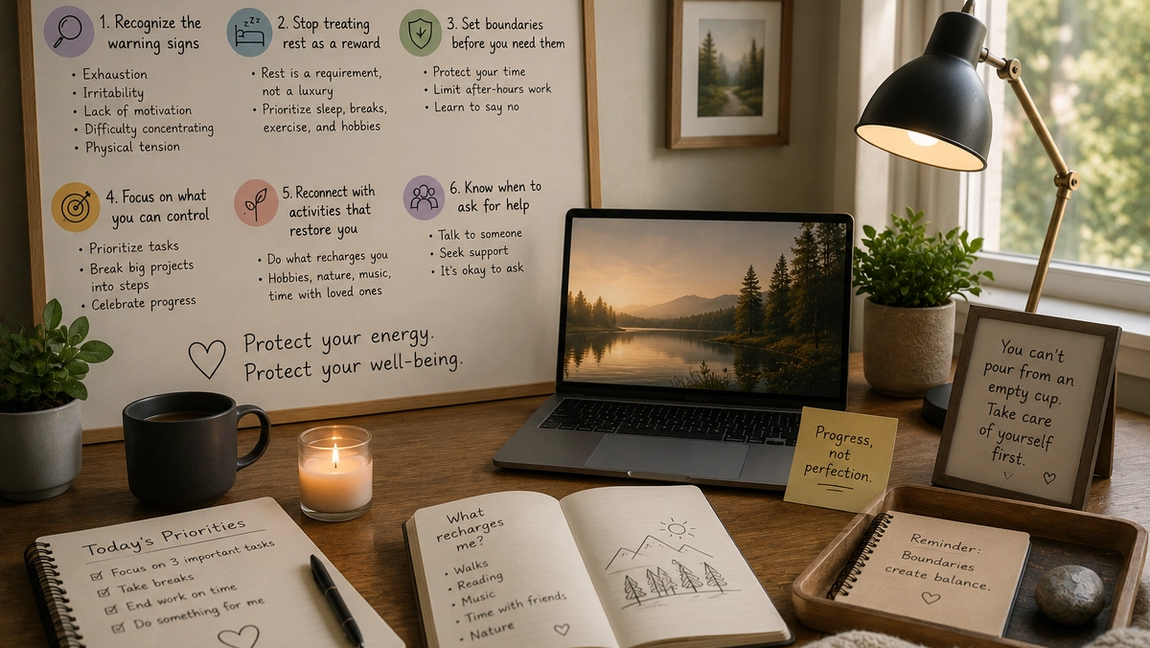
Recognize the early warning signs
Many people don’t realize they’re approaching burnout because they assume feeling constantly stressed is normal.
Common early signs include:
- Feeling exhausted even after sleeping
- Losing motivation for work or activities you once enjoyed
- Increased irritability or frustration
- Difficulty concentrating
- Feeling detached or emotionally numb
- Frequent headaches or physical tension
- A growing sense of cynicism or negativity
You may also notice that tasks that once felt manageable suddenly seem overwhelming.
Paying attention to these signals is important. Burnout is often easier to address in its early stages than after it has fully taken hold.
Stop treating rest as a reward
One of the most common contributors to burnout is the belief that rest must be earned.
Many people tell themselves they’ll relax after the next project, the next deadline, or the next busy period. Unfortunately, that next busy period often never ends.
Rest is not a luxury. It is a requirement for sustained performance.
This doesn’t necessarily mean taking long vacations or spending entire days doing nothing. It means creating regular opportunities for recovery through adequate sleep, breaks during the workday, exercise, hobbies, and time spent with people you enjoy.
When recovery becomes part of your routine rather than an occasional reward, you’re better equipped to handle stress.
Set boundaries before you need them
Burnout often develops when there are no clear limits between work and personal life.
Technology has made it possible to remain connected around the clock, but being available at all times comes with a cost. Constant notifications, emails, and work-related messages can prevent your brain from fully switching off.
Consider establishing boundaries that protect your time and energy. This might mean avoiding work emails after a certain hour, taking lunch breaks away from your desk, or learning to say no to commitments that exceed your capacity.
Boundaries are not about avoiding responsibility. They are about creating sustainable conditions for doing your best work.
Focus on what you can control
When people feel overwhelmed, they often focus on everything that needs to be done rather than what can realistically be accomplished today.
A useful strategy is to narrow your attention to the tasks and decisions within your control.
Instead of worrying about an entire month’s workload, focus on the most important priorities for the day. Break large projects into smaller steps. Celebrate progress rather than waiting for perfection.
This approach can reduce feelings of helplessness and make challenges feel more manageable.
Reconnect with activities that restore you
Burnout tends to shrink life down to obligations and responsibilities. Over time, enjoyable activities are often the first things people sacrifice.
Ironically, those activities are frequently what help protect against burnout in the first place.
Think about the activities that genuinely recharge you. This could be exercise, reading, spending time outdoors, cooking, creating art, listening to music, or simply having meaningful conversations with friends.
The goal isn’t to be productive during your free time. The goal is to create moments that restore your energy and remind you that life consists of more than work and obligations.
Know when to ask for help
Burnout is not a personal failure, and it is not something you have to handle entirely on your own.
If exhaustion, anxiety, low mood, or feelings of hopelessness persist despite making changes, it may be helpful to speak with a healthcare professional, therapist, or trusted mentor. Sometimes an outside perspective can identify solutions that are difficult to see when you’re overwhelmed.
Seeking support is not a sign of weakness. It’s often one of the most effective ways to prevent a temporary struggle from becoming a long-term problem.
Take burnout seriously
Burnout has a way of convincing people to keep pushing through, even when their minds and bodies are asking them to slow down. Unfortunately, ignoring the warning signs rarely makes them disappear.
The earlier you recognize burnout, the easier it becomes to address. By prioritizing rest, setting healthy boundaries, focusing on what matters most, and making time for recovery, you can protect your energy before burnout begins to take control.
Managing burnout isn’t about doing less. It’s about creating a healthier and more sustainable way to do what matters most.