How to Protect Your Privacy Online Without Being Paranoid
The internet has made life more convenient in countless ways. We can shop, bank, communicate, work, and access information from almost anywhere. At the same time, every online activity leaves behind a trail of data.
By Tiana Gregory on June 19, 2026
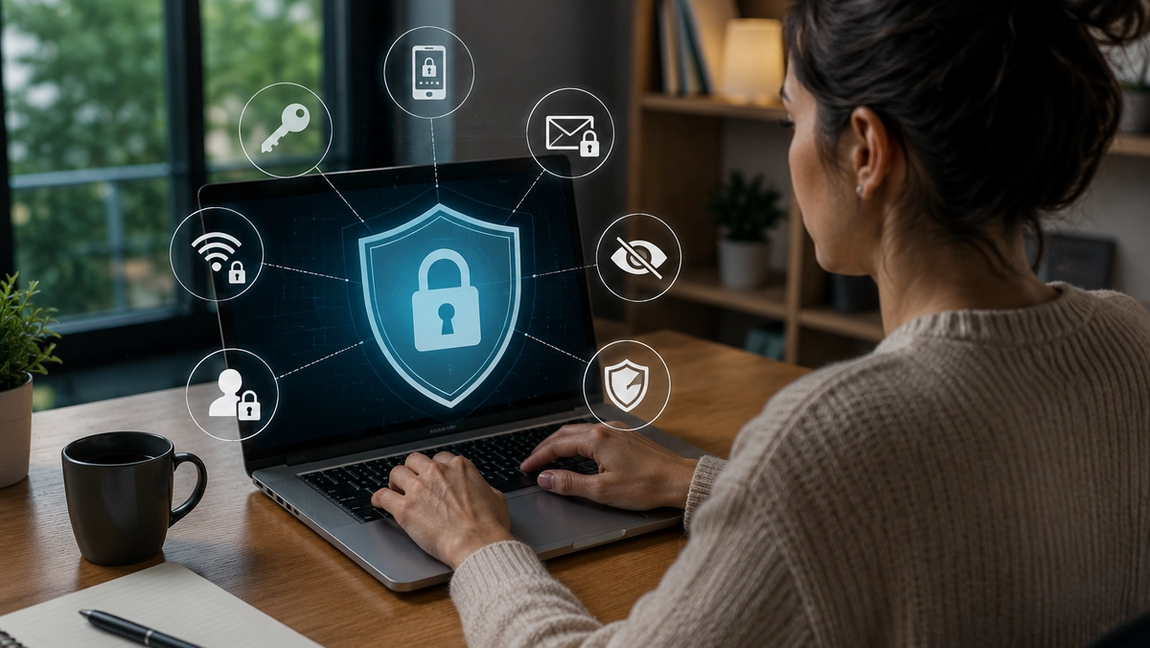
Getty Images
The internet has made life more convenient in countless ways. We can shop, bank, communicate, work, and access information from almost anywhere. At the same time, every online activity leaves behind a trail of data.
News headlines about data breaches, targeted advertising, and online scams can make digital privacy feel overwhelming. Some people respond by ignoring the issue altogether, while others feel pressured to adopt extreme measures that are difficult to maintain.
The reality is that protecting your privacy doesn’t require disappearing from the internet. It simply requires developing a few practical habits that reduce unnecessary risks while allowing you to enjoy the benefits of being online.
Understand what privacy really means
When people hear the word “privacy,” they often imagine hiding everything they do online. In reality, privacy is less about secrecy and more about control.
Protecting your privacy means having a say in who can access your information, how it is used, and what details about your life are shared with companies, advertisers, or strangers.
The goal isn’t to become invisible. It’s to make thoughtful decisions about your personal information rather than giving it away by default.
Once you view privacy as a matter of control rather than fear, it becomes much easier to approach the topic realistically.
Use strong and unique passwords
One of the simplest ways to improve online privacy is also one of the most effective.
Many people still reuse the same password across multiple accounts. The problem is that if one website experiences a data breach, attackers may try those same login details elsewhere.
Creating unique passwords for important accounts significantly reduces this risk. Password managers can make the process easier by generating and storing strong passwords for you.
Think of passwords as the locks on your digital front door. The stronger and more unique they are, the harder it becomes for others to gain access.
Turn on two-factor authentication
Even strong passwords are not perfect.
Two-factor authentication adds an additional layer of security by requiring a second verification step when signing in. This might involve a code sent to your phone, an authentication app, or another verification method.
While it adds a few extra seconds to the login process, it dramatically improves account security.
Whenever available, enabling two-factor authentication for email, banking, social media, and other important accounts is one of the smartest privacy decisions you can make.
Be mindful about what you share
Social media encourages people to share details about their lives, but not everything needs to be public.
Information such as your home address, travel plans, phone number, workplace details, or personal documents can sometimes be used by scammers or individuals with malicious intentions.
Before posting, consider who can see the information and whether you’re comfortable with it remaining online indefinitely.
You don’t need to stop sharing entirely. Simply becoming more intentional about what you post can significantly improve your privacy.
Review your privacy settings
Many apps and websites collect more information than most people realize.
Take a few minutes occasionally to review privacy settings on your social media accounts, devices, browsers, and frequently used apps. You may find options that limit data collection, location tracking, targeted advertising, or profile visibility.
Most platforms offer privacy controls, but they often require users to actively adjust them.
Small changes can make a meaningful difference without affecting how you use the service.
Be cautious with links and requests
Many privacy and security problems begin with simple mistakes.
Phishing emails, fake websites, fraudulent text messages, and suspicious links are designed to trick people into sharing information or downloading malicious software.
If something feels unusual, pause before clicking. Verify the sender, inspect website addresses carefully, and avoid providing sensitive information through unexpected messages.
A healthy level of skepticism is often one of the best forms of online protection.
Remember that convenience involves trade-offs
Many digital services are free because they collect data that helps fund their business models.
This doesn’t necessarily mean they’re dangerous, but it does mean there is often a trade-off between convenience and privacy. Understanding that trade-off allows you to make more informed choices about the apps and platforms you use.
In some cases, you may decide the convenience is worth it. In others, you may choose more privacy-focused alternatives.
The important thing is making that decision consciously rather than unknowingly.
Focus on practical habits, not perfection
It’s easy to become overwhelmed when thinking about online privacy. New technologies, evolving threats, and changing platforms can make it feel impossible to stay completely protected.
The good news is that perfection isn’t necessary.
Using strong passwords, enabling two-factor authentication, reviewing privacy settings, being thoughtful about what you share, and staying alert to scams will protect you from many common risks.
These habits require relatively little effort while providing significant benefits.
Stay informed without becoming fearful
Protecting your privacy online doesn’t require extreme measures or constant worry. Most people can dramatically improve their digital security through a handful of simple, consistent habits.
The goal isn’t to live in fear of technology. It’s to use technology intelligently.
By understanding how your information is collected, making thoughtful choices about what you share, and taking basic security precautions, you can enjoy the advantages of the digital world while maintaining greater control over your personal information.
In the end, good privacy practices are not about being paranoid—they’re about being prepared.