How to Write a Resume That Stands Out in 2026
The job market has changed dramatically over the past few years. Employers are receiving more applications than ever, while artificial intelligence and applicant tracking systems (ATS) are increasingly being used to screen candidates before a human ever sees their resume.
By Tiana Gregory on June 18, 2026
Getty Images
The job market has changed dramatically over the past few years. Employers are receiving more applications than ever, while artificial intelligence and applicant tracking systems (ATS) are increasingly being used to screen candidates before a human ever sees their resume.
In 2026, having a strong resume is no longer just about listing your experience. It’s about clearly communicating your value, showcasing measurable achievements, and making it easy for both software and recruiters to understand why you’re the right person for the job.
If you want your resume to stand out in a competitive market, here are the strategies that matter most.
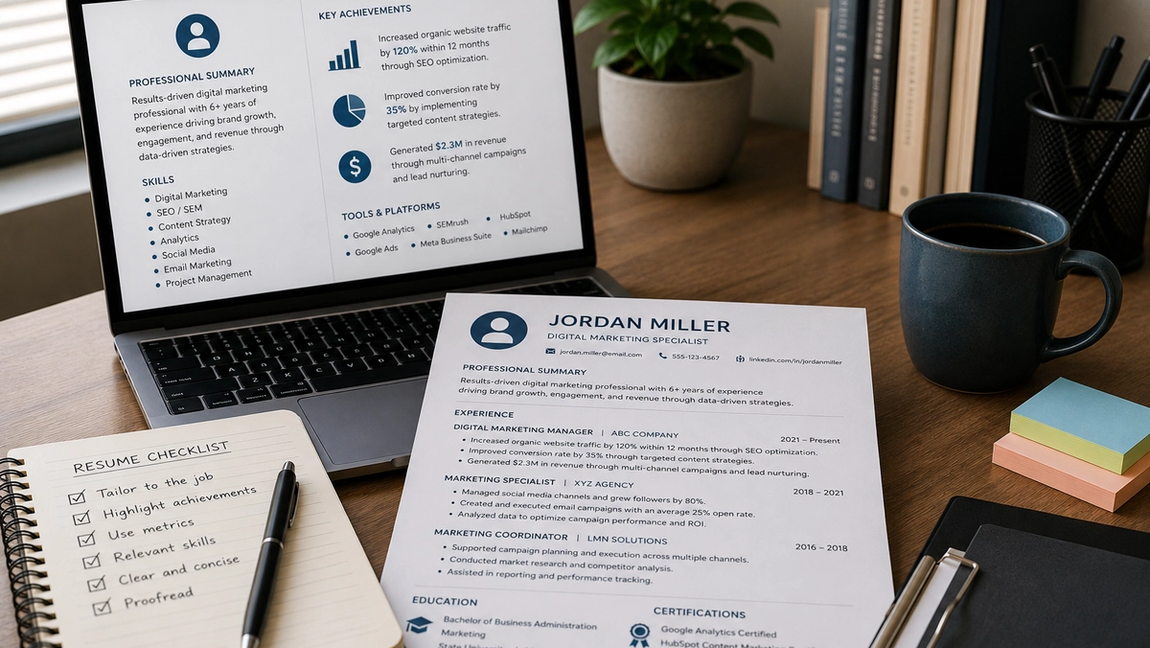
Start with a strong professional summary
The top section of your resume should immediately tell employers who you are and what you bring to the table.
A professional summary is usually two to four sentences that highlight your experience, expertise, and key strengths. Think of it as your personal introduction.
Instead of writing something generic like:
“Motivated professional seeking new opportunities.”
Try something more specific:
“Project manager with seven years of experience leading cross-functional teams and delivering large-scale development projects. Proven track record of managing budgets, improving operational efficiency, and coordinating stakeholders across multiple sectors.”
A strong summary encourages recruiters to keep reading.
Focus on achievements, not responsibilities
One of the most common resume mistakes is simply listing job duties.
Employers already know what a project manager, accountant, marketer, or software developer typically does. What they want to know is what you accomplished.
Compare these examples:
Weak:
- Managed social media accounts.
Strong:
- Increased social media engagement by 45% within six months through targeted content strategies.
The second example provides evidence of impact.
Whenever possible, include numbers, percentages, revenue figures, team sizes, or other measurable outcomes. These details help employers understand the value you’ve delivered.
Tailor your resume for each position
Sending the same resume to every employer is rarely the most effective strategy.
Many companies use applicant tracking systems that scan resumes for keywords related to the job description. If your resume doesn’t include relevant skills or terminology, it may never reach a hiring manager.
Before applying, review the job posting carefully and adjust your resume to reflect the specific qualifications and experience being requested.
This doesn’t mean exaggerating your background. It means presenting your existing experience in the most relevant way possible.
A tailored resume often performs significantly better than a generic one.
Keep the design clean and professional
A resume should be easy to read within seconds.
Complicated layouts, excessive graphics, unusual fonts, and crowded formatting can make it harder for recruiters to find important information.
In most cases, a clean design works best.
Use:
- Clear section headings
- Consistent formatting
- Bullet points for achievements
- Professional fonts
- Adequate spacing
Remember that many resumes are first reviewed on screens, not printed on paper. Simplicity and readability matter more than elaborate design elements.
Highlight relevant skills
Skills remain one of the most important sections of a modern resume.
Include a mix of technical skills and professional competencies that align with the role.
Depending on your field, examples might include:
- Data analysis
- Project management
- Budget management
- Graphic design
- Programming languages
- Content strategy
- Public speaking
- Stakeholder engagement
Focus on skills you can genuinely demonstrate rather than creating an overly long list.
Quality is more valuable than quantity.
Include links to your work when possible
In 2026, many employers expect to see evidence beyond a traditional resume.
If relevant, include links to:
- Professional portfolios
- Personal websites
- Published articles
- Design projects
- GitHub repositories
- LinkedIn profiles
- Research publications
Providing examples of your work allows employers to evaluate your abilities directly rather than relying solely on written descriptions.
This can be especially valuable in creative, technical, and research-oriented fields.
Remove outdated resume habits
Many resume conventions that were common years ago are no longer necessary.
In most cases, you can remove:
- Full mailing addresses
- References available upon request
- Personal photos (unless specifically required)
- Irrelevant work experience from many years ago
- Long objective statements
Modern resumes should prioritize relevant information and make efficient use of space.
Recruiters often spend only a short amount of time reviewing each application, so clarity is essential.
Make every word count
The strongest resumes are focused, concise, and results-oriented.
Rather than trying to include every detail of your career, prioritize the experience and achievements that are most relevant to the position you’re pursuing.
A recruiter should be able to quickly understand:
- What you do
- What you’ve accomplished
- What skills you bring
- Why you’re a strong candidate
If your resume communicates those points clearly, you’re already ahead of many applicants.
Build a resume that opens doors
A resume is more than a list of jobs. It’s a marketing document designed to show employers the value you can provide.
In 2026, successful resumes combine clear writing, measurable achievements, relevant keywords, and a clean structure that works for both recruiters and applicant tracking systems.
By focusing on results, tailoring your application, and presenting your experience strategically, you can create a resume that stands out and significantly improves your chances of landing interviews.
The goal isn’t simply to document your career. It’s to make employers excited about what you can contribute next.