The Difference Between Confidence and Self-Esteem at Work
Confidence and self-esteem are often used as if they mean the same thing. In the workplace, however, they are two very different qualities. Understanding the distinction can help you develop a healthier relationship with your career, handle challenges more effectively, and build lasting professional success.
By Amalia Davidson on June 18, 2026
Getty Images
Confidence and self-esteem are often used as if they mean the same thing. In the workplace, however, they are two very different qualities. Understanding the distinction can help you develop a healthier relationship with your career, handle challenges more effectively, and build lasting professional success.
Many people assume that confident employees automatically have high self-esteem, but that’s not always the case. Someone can appear highly confident in meetings, presentations, or leadership roles while privately struggling with self-doubt. Likewise, a person with strong self-esteem may not always be the loudest or most assertive person in the room.
The key difference lies in what these qualities are built upon.
What confidence really means
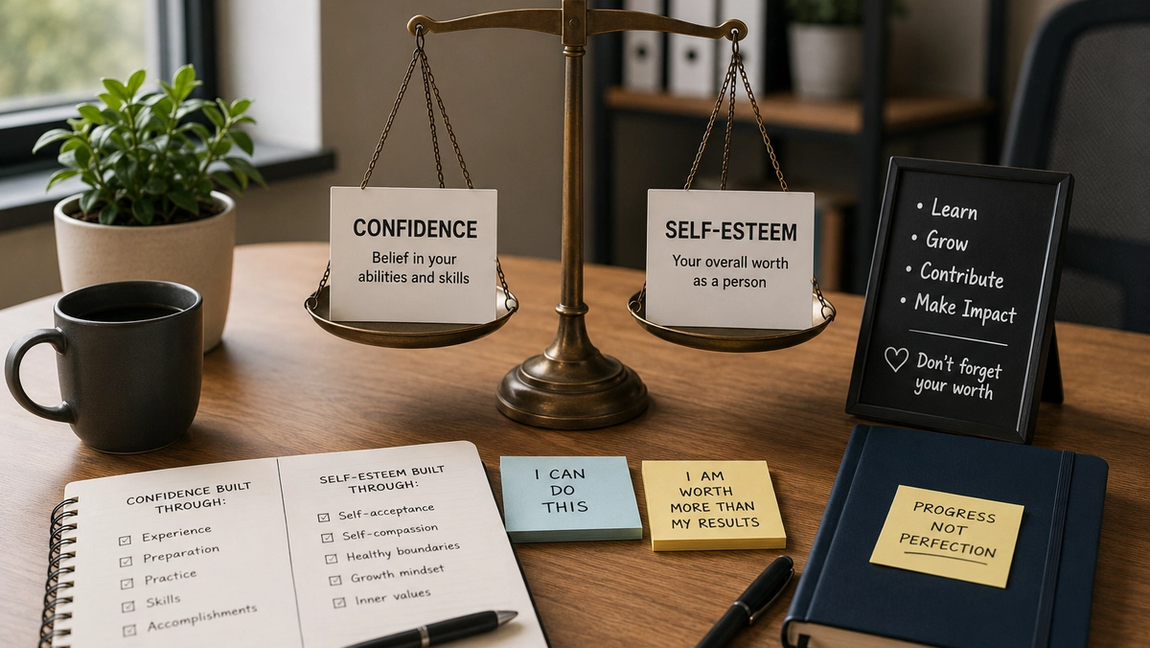
Confidence is your belief in your ability to perform a specific task or handle a particular situation.
At work, confidence often develops through experience, preparation, and proven competence. The more often you successfully complete a task, the more confident you become in your ability to do it again.
For example, you may feel confident:
- Leading a team meeting
- Delivering a presentation
- Managing a project
- Negotiating with clients
- Solving technical problems
Confidence tends to be situation-specific. You might feel highly confident in one area of your job while feeling uncertain in another.
Importantly, confidence can increase relatively quickly as your skills and experience grow.
What self-esteem really means
Self-esteem is broader and deeper than confidence.
It refers to your overall sense of self-worth and how you view yourself as a person, regardless of performance or achievements.
People with healthy self-esteem generally believe they have value even when they make mistakes, receive criticism, or experience setbacks.
At work, strong self-esteem often shows up as:
- Accepting feedback without feeling personally attacked
- Recovering from mistakes more easily
- Setting healthy boundaries
- Being comfortable asking for help
- Not constantly seeking validation from others
Unlike confidence, self-esteem is not tied to a specific skill or task. It reflects your relationship with yourself.
Why confidence and self-esteem don’t always match
It’s possible to have one without the other.
For example, a highly skilled professional may be extremely confident in their technical abilities but constantly worry about whether they are good enough as a person. They may seek approval from managers, fear failure excessively, or struggle with imposter syndrome despite strong performance.
On the other hand, someone with healthy self-esteem may acknowledge that they lack experience in a particular area without feeling threatened by it. They can admit what they don’t know because their self-worth isn’t dependent on being perfect.
This distinction explains why some successful professionals still struggle with insecurity, while others remain grounded even during challenging periods.
How confidence grows at work
Confidence is largely built through action.
Many people wait until they feel confident before taking on new challenges. In reality, confidence often develops after taking action, not before.
You become more confident by:
- Learning new skills
- Practicing regularly
- Taking on challenging projects
- Gaining experience
- Successfully overcoming obstacles
Each accomplishment provides evidence that you can handle future challenges.
Confidence grows when you repeatedly prove to yourself that you’re capable.
How to strengthen self-esteem
While confidence comes from competence, self-esteem often develops through self-acceptance.
Improving self-esteem may involve:
- Recognizing your strengths and limitations honestly
- Treating yourself with the same compassion you would offer a colleague
- Separating mistakes from personal worth
- Avoiding constant comparisons with others
- Celebrating effort as well as results
Healthy self-esteem allows you to maintain perspective when things don’t go as planned.
Instead of thinking, “I failed, therefore I’m a failure,” you learn to think, “I made a mistake, and I can learn from it.”
That shift can have a profound impact on long-term career satisfaction and resilience.
Why both matter for career success
Confidence and self-esteem complement each other.
Confidence helps you take action, pursue opportunities, and perform effectively. Self-esteem helps you remain resilient when challenges arise.
Without confidence, you may hesitate to pursue promotions, leadership roles, or new opportunities. Without self-esteem, your sense of worth may become dependent on constant success and external validation.
The strongest professionals tend to develop both. They believe in their abilities while also recognizing that their value extends beyond their latest achievement or mistake.
Build skills and self-worth together
Career growth isn’t just about becoming more capable. It’s also about developing a healthier relationship with yourself.
Confidence allows you to trust your skills. Self-esteem allows you to trust your worth.
When you understand the difference, you stop relying solely on achievements to feel good about yourself. Instead, you build a foundation that supports both professional performance and personal well-being.
In the long run, that combination is often far more powerful than confidence alone.