The Mental Health Habits People Quietly Swear By
When people talk about improving mental health, the conversation often focuses on major life changes—taking a long vacation, changing careers, or completely transforming daily routines. While those things can sometimes help, many people find that their emotional well-being improves through much smaller, less dramatic habits.
By Noe Reyna on June 18, 2026
Getty Images
When people talk about improving mental health, the conversation often focuses on major life changes—taking a long vacation, changing careers, or completely transforming daily routines. While those things can sometimes help, many people find that their emotional well-being improves through much smaller, less dramatic habits.
In fact, some of the most effective mental health practices are surprisingly simple. They don’t require expensive equipment, special training, or hours of free time. They’re the quiet habits people build into everyday life that help them stay grounded, resilient, and emotionally balanced.
Here are some of the mental health habits that many people quietly swear by.
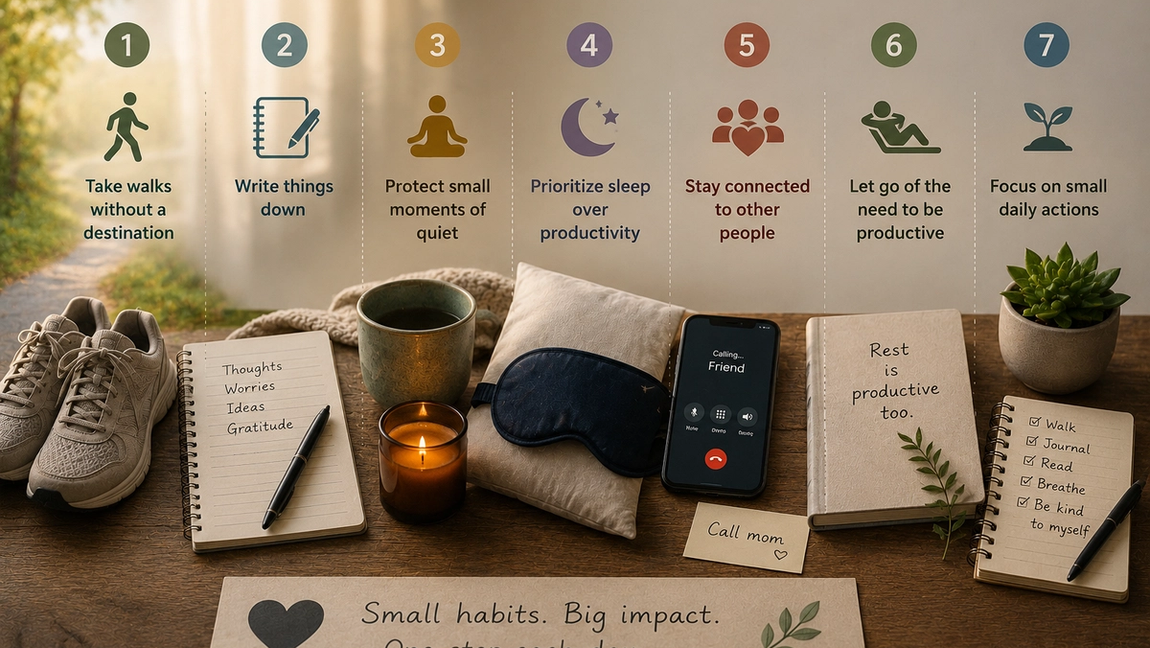
Taking walks without a destination
Walking is often recommended for physical health, but its mental health benefits can be just as powerful.
Many people find that a short walk helps clear their thoughts, reduce stress, and improve their mood. Interestingly, the most restorative walks are not always focused on exercise or reaching a specific destination. Sometimes the simple act of moving through a different environment is enough to create mental space.
Whether it’s a walk through a park, a neighborhood, or a quiet street, stepping away from screens and daily pressures can provide a valuable reset.
Writing things down
Thoughts tend to feel bigger when they remain trapped in our heads.
Many people develop the habit of writing down worries, ideas, frustrations, or reflections in a journal, notebook, or notes app. The goal isn’t to create perfect writing. It’s to create clarity.
Putting thoughts into words can make problems feel more manageable and help identify patterns that might otherwise go unnoticed. Even a few minutes of writing can reduce mental clutter and make it easier to focus on what truly matters.
Protecting small moments of quiet
Modern life is filled with constant stimulation. Notifications, podcasts, music, videos, and endless streams of information compete for our attention from the moment we wake up.
As a result, many people intentionally create brief periods of quiet throughout the day.
This might mean drinking coffee without checking a phone, sitting outside for a few minutes, or simply allowing the mind to wander without immediately reaching for entertainment.
These small moments can provide an opportunity to process emotions, reflect, and recharge mentally.
Prioritizing sleep over productivity
Many people view sleep as something that can be sacrificed in exchange for getting more done. Over time, however, lack of sleep often creates more problems than it solves.
Quality sleep plays a critical role in emotional regulation, decision-making, memory, and stress management. People who consistently prioritize sleep often report improved mood, greater patience, and better resilience during difficult periods.
While perfect sleep isn’t always possible, treating rest as a necessity rather than an optional luxury can have a profound impact on mental well-being.
Staying connected to other people
Human connection remains one of the most powerful contributors to mental health.
This doesn’t necessarily mean having a large social circle. For many people, a few meaningful relationships provide the greatest benefit. A conversation with a trusted friend, a family member, or a supportive colleague can help reduce feelings of isolation and offer perspective during challenging times.
Even brief interactions can make a difference. Sometimes a simple check-in or shared conversation is enough to improve someone’s day.
Letting go of the need to be productive all the time
Many people unknowingly tie their self-worth to productivity. If they’re not accomplishing something, they feel guilty or restless.
Over time, this mindset can contribute to stress, exhaustion, and burnout.
One habit that mentally healthy people often develop is allowing themselves to rest without constantly justifying it. They recognize that relaxation, hobbies, and enjoyment have value even when they don’t produce measurable results.
Not every moment needs to be optimized. Sometimes doing less is exactly what the mind needs.
Focusing on small daily actions
Mental health is rarely transformed by a single breakthrough moment. More often, it improves through small choices repeated consistently over time.
A short walk, a good night’s sleep, a conversation with a friend, a few minutes of quiet reflection, or writing down your thoughts may seem insignificant on their own. Yet these habits can gradually strengthen emotional resilience and improve overall well-being.
The people who seem most grounded are not necessarily the ones with the least stress or the fewest problems. Often, they are simply the ones who have built small routines that help them cope with life’s challenges more effectively.
In the end, good mental health is not about perfection. It’s about creating habits that help you navigate life with greater balance, self-awareness, and care.